
10
Sep
It is not clear what causes the additional pathway to develop inside the heart. Some people experience few to no symptoms.
What is wpw heart condition. Episodes can last for seconds, minutes, hours or, in rare cases, days. Every life deserves world class care Some people experience few to no symptoms.
A specialized cluster of cells called the atrioventricular node. People who have wpw syndrome are born with an extra electrical pathway in their heart. The cause is an extra electrical connection in the heart.
If you have wpw, you may have episodes of palpitations or rapid heartbeats. This problem with the heart is present at birth (congenital), although symptoms may not develop until later in life. [2] [3] about 60% of people with the electrical problem developed symptoms.
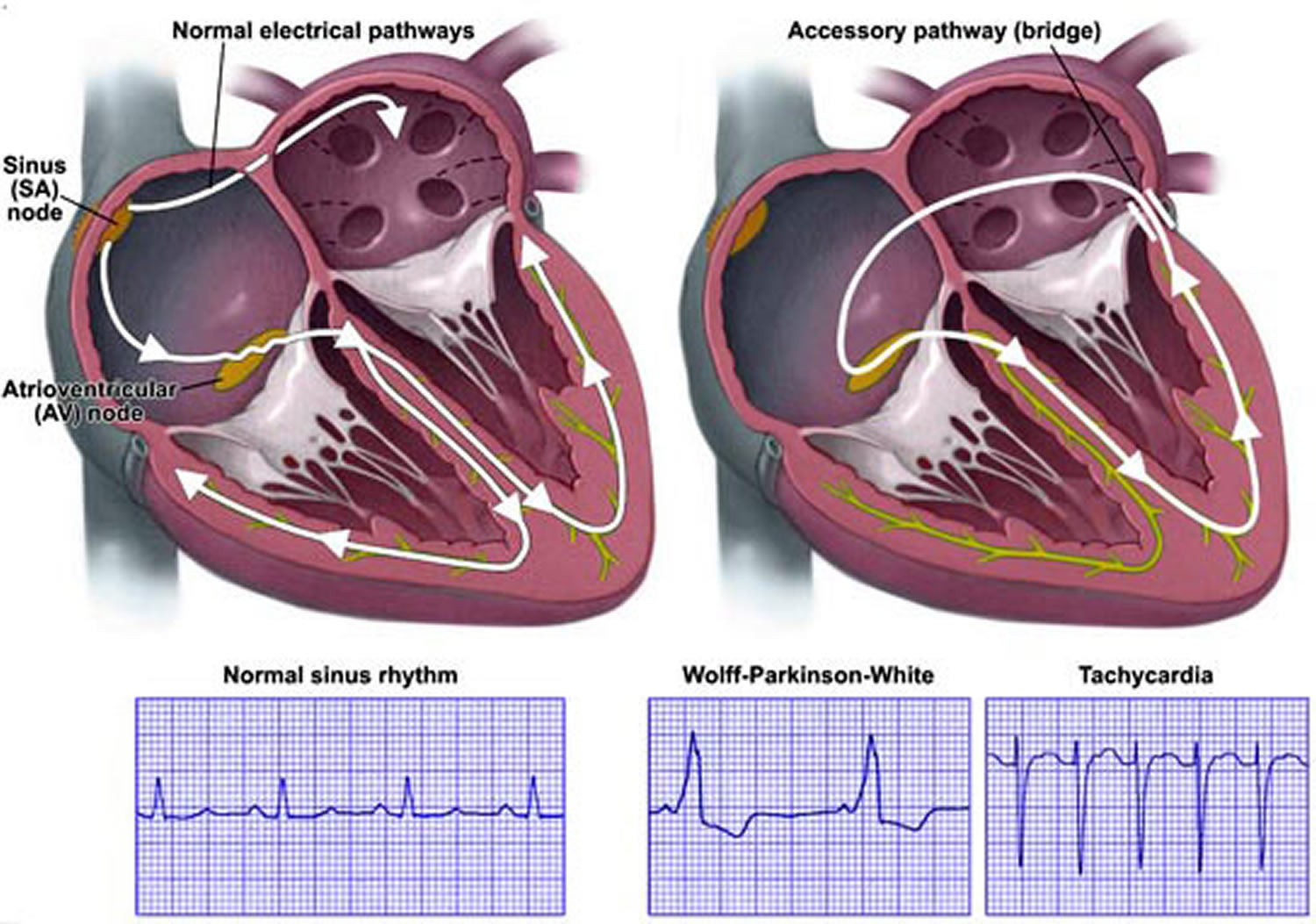
This can lead to a rapid heart rate, which is called tachycardia. Wpw affects one to three of every 1,000 people worldwide. Wpw syndrome is a condition that makes the heart suddenly beat abnormally fast, in an abnormal heart rhythm called supraventricular tachycardia (svt).
Small sensors attached to your chest and arms record electrical signals as they travel through your heart. It causes a rapid heart rate. Wpw affects less than 1 in 100 people.
It causes a rapid heart rate. In wpw, there is a second pathway that the electricity can be conducted through. It changes the rhythm of their heartbeat.
But most times it happens randomly and doesn’t run in families. They may experience a very fast heartbeat (called tachycardia) for periods of time. Your doctor will likely recommend tests to diagnose wpw syndrome, such as:
Wpw syndrome is one of the most common causes of fast heart rate problems in infants and children. It’s a relatively common condition, affecting between one and three in every 1,000 people. It is not clear what causes the additional pathway to develop inside the heart.
The frequency with which episodes occur can vary from person to person. If you have wpw, you may have episodes of tachycardia, when your heart beats very rapidly. A condition that is caused by an abnormality in the electrical system of the heart, which normally tells the heart muscle when to contract.
Symptoms of the arrhythmia that occur in wpw syndrome may include palpitations, chest pain or tightness, shortness of breath, dizziness, or faintness. Your doctor can look for patterns among these signals that indicate an extra electrical pathway in your heart. Wpw affects less than 1 in 100 people.
In the normal heart, there is only a single pathway that conducts electricity through the heart to coordinate the beating. Parents can pass it down to their children. If you have wpw, you may have episodes of palpitations or rapid heartbeats.
The heartbeat is controlled by electrical signals that move through the heart in a highly coordinated way. The cause is an extra electrical connection in the heart. The condition is present at birth, but genetic factors usually do not play a major role.
Wpw is a condition in which the heart beats abnormally fast due to electricity incorrectly traveling between two different pathways in the heart.
Previous post
What is wpw syndromeNext post
What is victoza for