05
Dec
The purpose of the law is to make sure doctors make. The stark law is a provision of the social security act that prohibits physicians from making certain kinds of referrals for health services.
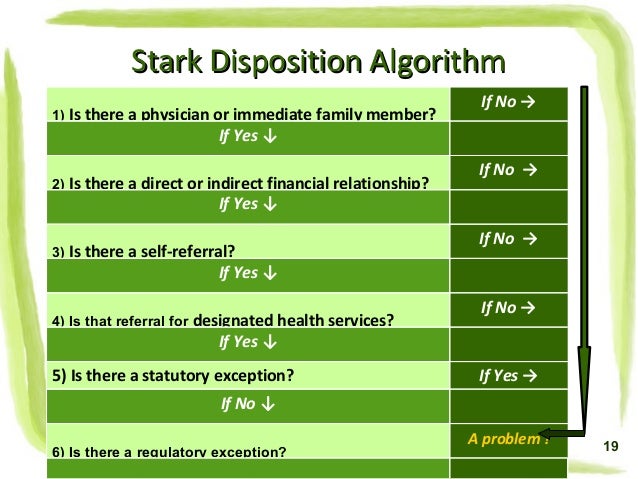
What is stark law. Specifically, it bars a physician from referring a patient to another medicare or medicaid provider for “designated health services,” if the physician or a family member has a financial relationship. However, ambiguities in the stark law have frozen many providers in place, fearful that even beneficial arrangements might violate the law, which can come with dire and costly consequences. An example of a stark law violation is a hospital paying doctors money to refer cardiac patients to their hospital.
The stark law is a federal law found at 42 u.s.c. The stark law (42 u.s.c. Stark law is a law that can result in hefty violations for physicians and medical practitioners if violated, so understanding the law in its entirety is vital to preventing legal issues that may arise as a result.
This has resulted in healthcare providers spending millions of dollars complying with arcane regulations instead of putting those dollars toward patient care. Section 1877 of the social security act (the act) (42 u.s.c. The stark law does maintain a definition of fair market value but it does not dictate actual numbers.
Stark law or the “physician referral law” is a set of laws that forbids doctors from referring patients to a “designated health service” with which they have a financial relationship. A financial interest includes compensation, ownership and investment interests. The stark law (42 u.s.c.
Those services are legally defined as designated health services (“dhs”) which include laboratory, physical therapy, radiology, and hospital services. The purpose of the law is to make sure doctors make. These designated health services include:
The stark law is a complex regulatory framework that focuses on physician financial relationships with entities in which a physician could refer certain services. These types of referrals are prohibited by law because these “designated health services” are generally payable by medicare or medicaid, which are federal healthcare programs. Referrals under the stark law apply to designated health services.
The stark law is a provision of the social security act that prohibits physicians from making certain kinds of referrals for health services. As an insurance agency with roots in the medical field, unity insurance, formerly medchi insurance agency, understands the complexities. Often, however, the kickback is disguised, such as offering free or reduced rental space or other services.
The following definition is from the regulations: The original stark laws, passed at a time when most. The stark law is a healthcare fraud and abuse law that prohibits physicians from referring patients for certain designated health services paid for by medicare to any entity in which they have a “financial relationship.”
The law aims to protect the medicare population from an overprescribing of unnecessary medical services. The federal government interprets the term “financial relationship” broadly to include any direct. These statutes currently reside under the purview of centers for medicare & medicaid services (cms) fraud and abuse laws.
§ 1395nn), originally named the patient referrals act, prohibits a physician from referring medicare or medicaid patients to an entity with which the physician or immediate family member has a financial relationship. Similarly, it is a violation of stark for a laboratory or outpatient clinic to pay hospitals to refer patients to them. The stark law is a public service law that prohibits practitioners from making improper referrals when there is a conflicting financial interest.
§ 1395nn that prohibits doctors from making referrals of medicare and medicaid patients for certain “designated health services” to entities in which the doctor (or an immediate family member of the doctor) has a financial relationship. The stark law is a healthcare fraud and abuse law that prohibits physicians from referring patients for certain designated health services paid for by medicare to any entity in which they have a “financial relationship.”. Stark law and the aks and, as a result, complete alignment between the exceptions to the stark law and safe harbors to the aks is not feasible.
What is the stark law? The stark law only applies to “ designated health services,” which include many of the ancillary services family physicians provide, such as clinical laboratory services, outpatient.
Previous post
What is symbicort forNext post
What is simvastatin generic for